3 Months to Shift Your Life: Power of Now, Joy & Perspective✨
I just returned from a short trip back to my hometown—St. Petersburg—and I had a deep reflection that I couldn't wait to share with you. 🏃♀️✨
Although it was technically a 10-day trip, travel took a day and a half each way, leaving me with just one single week. But in those 7 days, I completed what felt like two months' worth of living.
How? By giving myself 3 months to focus on 3 life-changing principles.
1. THE POWER OF NOW (BE IN THE MOMENT) ⏱️
The moment you hear that quiet inner voice encouraging you to take action, say YES!
-
Say Yes to Action: I found myself saying "yes" to everything I wanted to do without overthinking or putting it off.
-
Habit Stacking in Action: On my rest day, I wanted to do yoga instead of sitting still. So I used the Habit Chain: The exact second my feet touched the floor in the morning, I went straight to yoga. No changing clothes, pajamas still on, zero friction! 🧘♀️
-
The 5-Second Rule: Count 5-4-3-2-1 and step directly into action
...
Not One-Size-Fits-All: How to Personalize Your Fitness Routine
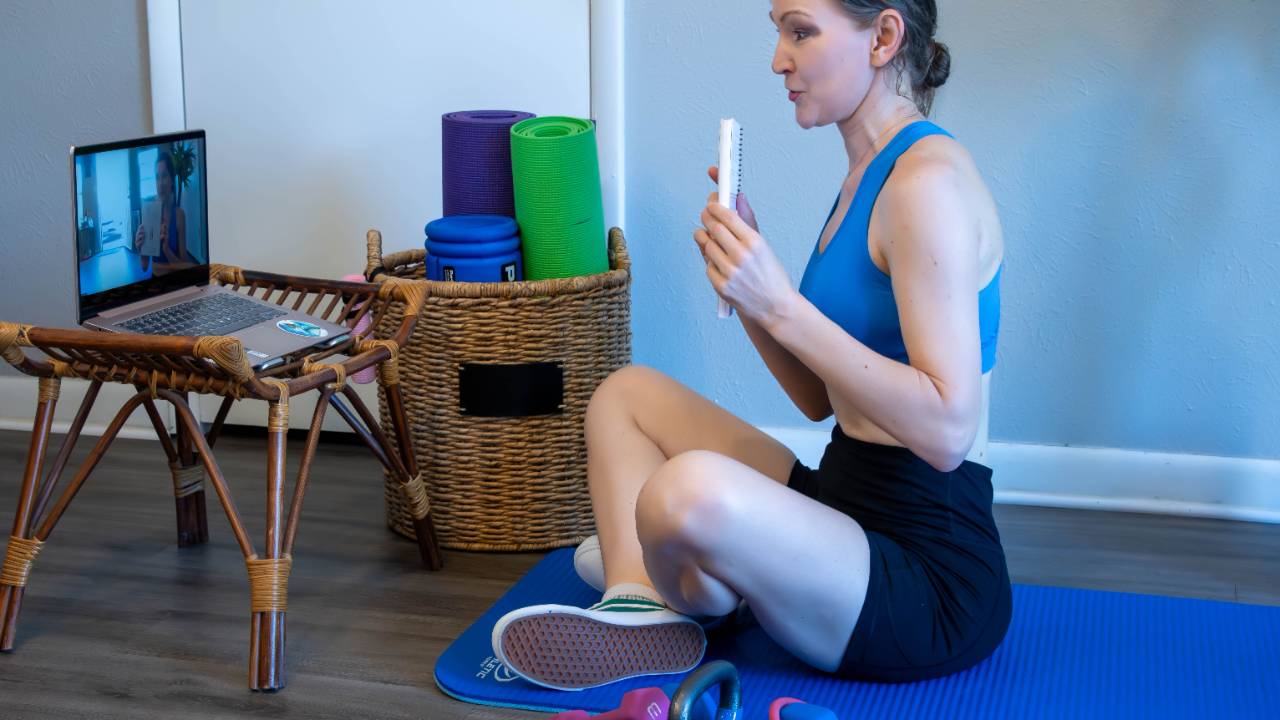
When most people decide to "get fit," they jump straight into intense workouts without a map. But true, safe, lasting fitness isn't one-size-fits-all—it must be personalized to your body, your physical history, and your specific goals.
Within the Wellness Vortex Movement Hierarchy, after building foundational habits around daily non-exercise movement and proper posture awareness, we enter the realm of Formal Fitness Personalization.
To build a routine that actually works for your body instead of against it, we use a simple 3-step personalized approach grounded in the gold standard of exercise science: the NASM Optimum Performance Training (OPT™) Model.
Step 1: Define Your Primary Goal
Your primary objective determines your training style, rep ranges, and intensity. While everyone’s journey is unique, most goals fall into four main categories:
-
Weight Loss & Management
-
Training Focus: High-repetition, low-to-medium resistance, compound movements, and shorter rest p
...
-
That Feeling... before..during..and after (the gap)
Have you ever noticed that feeling right before you start something hard?
The hesitation before a workout, the moment right before your first bite when you know you're eating out of stress instead of hunger, or the pause before speaking when you want to choose words that actually honor who you want to be.
Most of us try to bridge that gap with sheer willpower. We try to force ourselves to change our actions. But transformation doesn’t start with what we do.
It starts with how we feel.
3 Steps to Master the Gap
1. Master Showing Up (The 3-to-30-Second Rule)
The hardest part of any habit is always the beginning. Whether it's stepping onto the workout mat or taking a deep, intentional breath before eating, the resistance lives in the anticipation.
-
The Shift: Stop fighting the resistance. Instead of focusing on the hard work ahead, tap into the feeling of your wish fulfilled. Act as if you are already the person who moves, chooses health, and honors their body. Give yourself
...
Rediscover Yourself Through Food: Why Your Diet Fails Until You Change How You See Yourself
We live in a world saturated with endless nutritional noise. At any given moment, there are hundreds of trendy diets floating around the internet, each claiming to be the magic pill for weight loss, energy, and long-term vitality.
We are taught to obsess over the what: count the macros, cut the carbs, restrict the calories, and strictly police our plates.
Yet, despite all the tools, calculation apps, and rigid meal-prep strategies available, the statistics remain unchanged. Most people stay locked in an exhausting cycle of restriction, guilt, and burnout.
Why? Because the global diet industry is missing the fundamental link to true physiological and psychological transformation. They are trying to change the food without addressing the person eating it.
If you want to step out of the dietary chaos and build a rock-solid foundation for your long-term health, you have to look past the plate. You have to look directly into the mirror.
The Core Laws of Nutritional Psychology
Inside t...
Stop Filling the Silence: The Art of "Empty Happiness"
We spend so much of our lives waiting for the "big things" to change our internal weather. We wait for the promotion, the milestone, or the perfect set of circumstances to finally say, "Now, I am happy."
But I’ve come to realize that this is often the wrong approach. We are conditioned to fill our lives with noise, constant connection, and endless achievement, believing that if we just keep doing, we will eventually feel complete.
But I want to challenge you with a different concept: "Empty Happiness."
What is "Empty Happiness"?
It sounds like a paradox, doesn't it? We usually think of happiness as something "full"—a overflowing cup of joy. But "Empty Happiness" is the sacred, spacious silence we cultivate within ourselves.
It is the ability to stand in the middle of your own life—even when it feels as chaotic as a crowded airport—and be completely, peacefully alone with your own soul. It is not about doing; it is about being enough, on your own, to overflow.
The Courage to...
The Current State of Wellness: Escaping the Paradox of Choice
We often view wellness as a future destination—something we will finally "have time to do" tomorrow, after the weekend, or when life slows down. But if we want to address the real state of health today, we have to face a fundamental truth: wellness is exactly what you are doing right now.
There is no such thing as "not doing" wellness. Every single choice you make in this exact moment—how you breathe, how you sit, how you react to stress—is an act of wellness. It either takes you up the Vortex or pulls you down. We often label a lack of healthy habits as "procrastination," but in reality, you are never doing nothing. You are always doing something. You are simply practicing habits that don't serve you.
The Paradox of Choice in Modern Society
In our modern world, we are caught in a strange paradox. Never before in human history have we had access to so many healthy choices, organic foods, specialized diets, and shiny new fitness programs. Yet, collectively, we are moving toward th...
The Most Dangerous Health Risk? It’s Not What You Think.
I was sitting in the park recently, watching the steam rise from my coffee, and I kept coming back to a single word that I hear from my coaching clients almost every single day.
It’s a word that is more dangerous to your health than any "bad" habit or missed gym session.
That word is "Later."
The Myth of "A Better Time"
We are masters of the "To-Do" list, but we’ve become experts at putting ourselves at the very bottom of it. We tell ourselves:
-
“I’m too overwhelmed to focus on my fitness right now.”
-
“I’ll start my nutrition plan once this project is done.”
-
“I’ll focus on my posture once the kids are out of school.”
But here is the "Mic Drop" truth: Later doesn't exist. 🎤💥
We only live in this current, singular moment. Whatever happened a second ago is gone. Whatever you have planned for tonight might not even happen. All we have is Now. When we say we are "waiting for a better time" to prioritize our wellness, what we are actually doing is choosing to ...
What Your Posture Tells About You
The way we carry ourselves speaks volumes before we even utter a word. Our posture is not just about how we look; it's a significant part of our non-verbal communication, influencing how confident, competent, and positive we appear to others.
Here are 7 essential tips drawn from expert advice on mastering your posture, each designed to enhance your personal and professional development.
1. Understand the Importance of Proper Posture:
Recognizing the crucial role posture plays in our lives is the first step. It's more than aesthetics; it's about how we present ourselves to the world. Good posture is aligned with confidence and positivity, affecting both our self-perception and how others perceive us.
2. Leverage First Impressions:
Your posture is a key player in the kind of first impression you leave. As soon as you step into a room, your posture is silently communicating your confidence and positivity. This makes mastering good posture essential for impactful non-verbal commu...
Feeling Stuck? Use This 3-Step System for the Ultimate Transformation.
I was making my coffee this morning, just watching the steam rise, and I got wrapped up in a thought that I think many of you are carrying today, too. It’s that heavy, stagnant feeling of being stuck.
In my work as a Wellness Coach, I hear it every day:
-
"Nadya, I’m stuck at this weight."
-
"I’m stuck in this fatigue." * "I just can’t get the breakthrough I need."
But as I was pouring my coffee, I realized something: How we do one thing is how we do everything. If I feel stuck in my health, I can almost guarantee I’ll start feeling stuck in my bank account, my relationships, or that nagging feeling that I just want my life to move along a little bit faster. Do you feel that? That "enough is enough" moment?
The Truth About Being "Stuck"
Here’s the thing—animals don’t get "stuck." Only humans do. That’s because "stuck" isn’t a physical object. I can touch my journal, I can touch my coffee mug... but I can’t touch "stuck." It’s an experience. It’s a story we tell ours...
10 Ideas to Hit Your Daily Step Goal
I have 10 ideas for us to hit your daily steps without struggling in the gym or taking a long walk!
Ready?
Morning
- Brush Teeth While Walking: Multitask by getting in some steps while you brush your teeth.
At Work
- Park Far: Whenever you go out, intentionally park your car a bit farther away from your destination.
- Walk and Talk: Make your phone calls or video chats more active by pacing around while you chat.
- Use a Stand-Up Desk: If you have the option, work at a stand-up desk to avoid sitting for too long.
- Hourly Movement Breaks: Set a reminder to get up and move around for a few minutes every hour.
- Take a Longer Route to the Bathroom: Don't choose the closest restroom; opt for one that requires a bit of a walk.
- Pick Up Things in the Office / House: Use tidying up as an opportunity to get extra steps in.
At Home
- Kitchen Circles: While waiting for something to cook in the microwave, make circles around your kitchen.
- Watch TV and Walk: Instead of...

Hi! I am Nadya!
Accountability Wellness Coach!
Tired of feeling stuck? The Wellness Vortex empowers you to break free from pain, master your mindset, nutrition, and fitness routines so you can live life with Power! "Own Your Health to Own Your Life!" Discover your self-care score and start your journey to wellness today!

It's better together! Join the CLUB!
Be consistent and mindful in healthy habits.
Gain confidence and strength in your health and life.
Be supported by like-minded community.
Have fun being well!
Stay connected with weekly reflections and more!
Join my insights to receive the latest insights on non-negotiable health and life with power!
Don't worry, your information will not be shared.